From the 1980s onwards, debates around Te Tiriti o Waitangi and indigenous
rights created fertile ground for restorative and culturally grounded reforms.
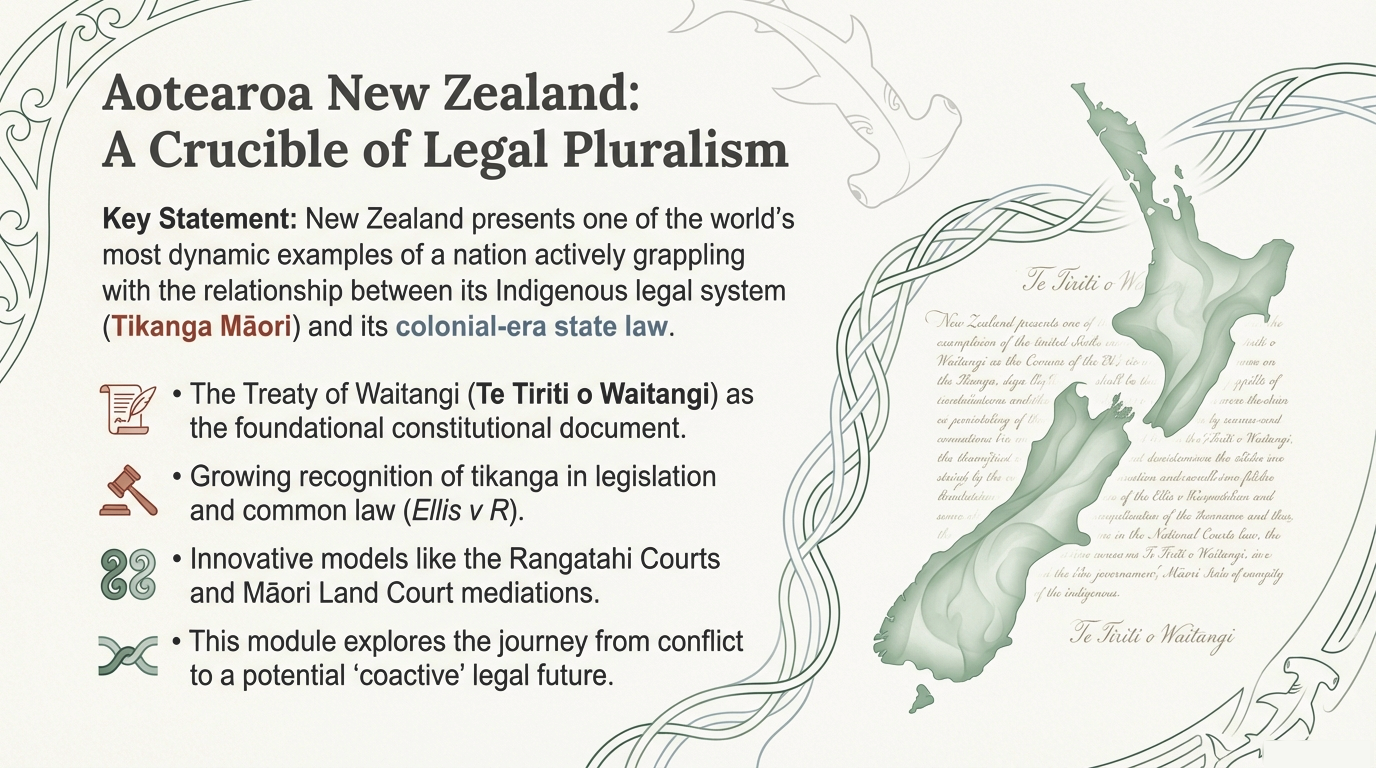
Today, the legal landscape includes specialist courts, legislated youth justice
conferencing and a District Court framework—Te Ao Mārama—that seeks to
ensure participants are “seen, heard, understood and able to meaningfully
participate.”
These developments are not a simple revival of pre-colonial practice. Rather,
they are contemporary innovations that draw on tikanga Māori and community
experience to reshape state processes in a bicultural direction.
Key idea: Aotearoa is deliberately re-engineering a common law
system so that tikanga Māori is not an add-on at the margins, but part of the
core architecture of justice.