| Core values |
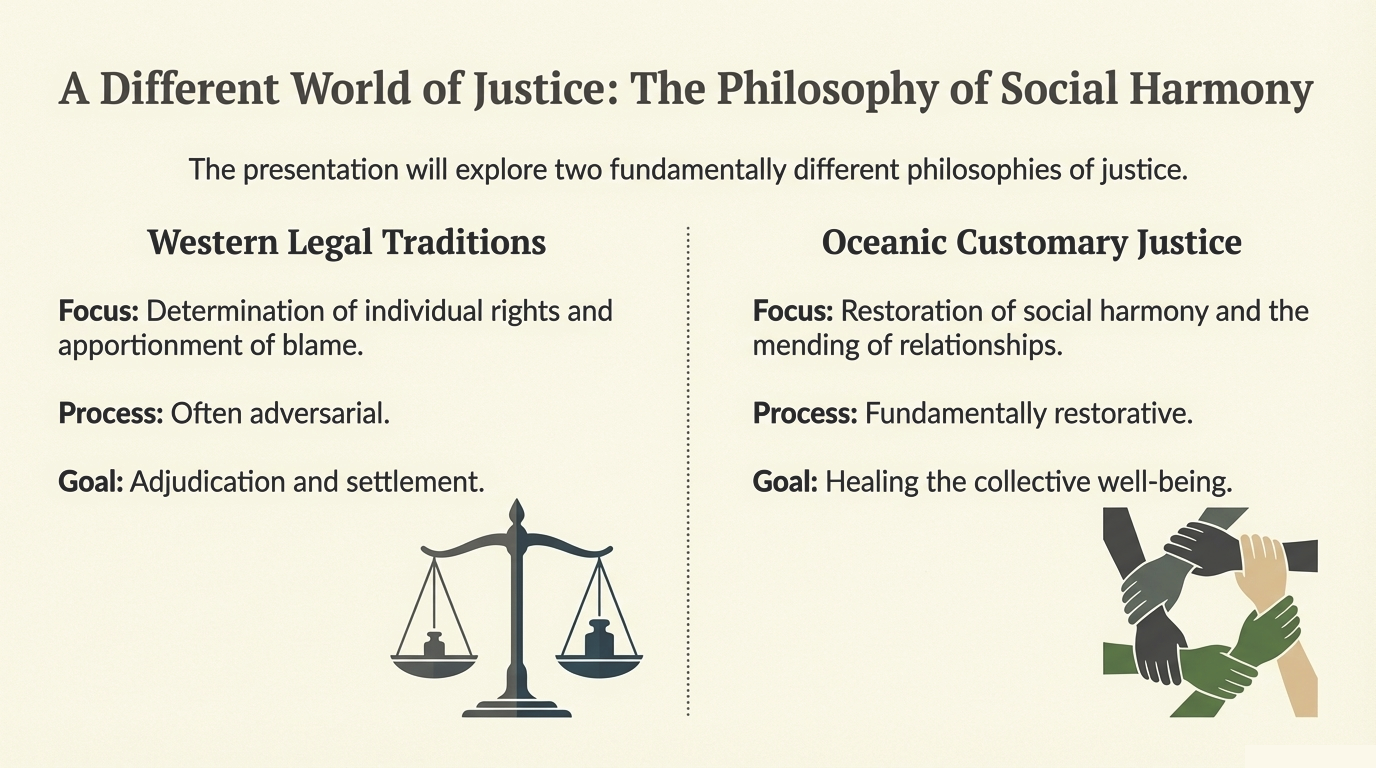
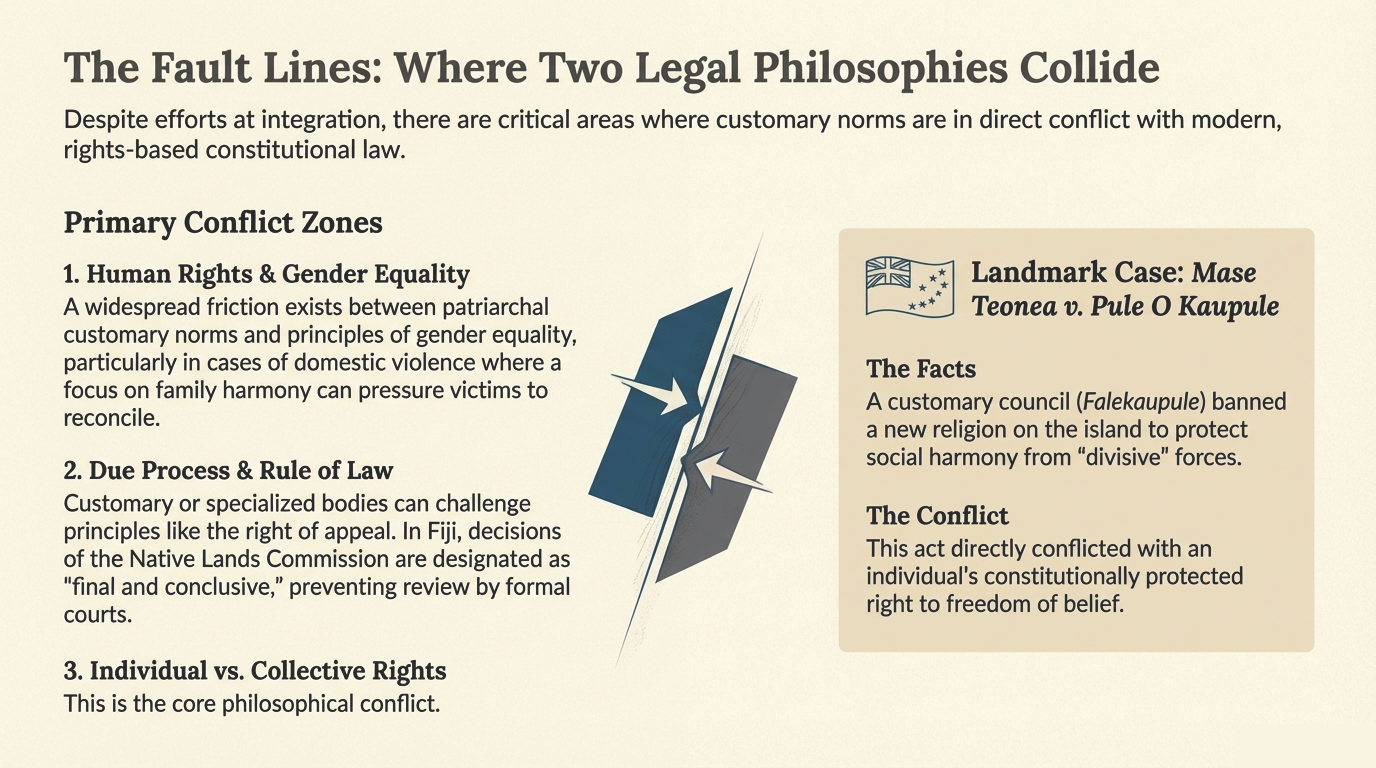
Restoring collective harmony, honouring kinship duties, and repairing relationships through community consensus. |
Protecting individual rights and interests, party self-determination, and procedural fairness between discrete actors. |
| Role of third party |
Respected insider (chief, elder, council) who may guide, advise, or decide in accordance with custom. |
Accredited external neutral whose task is to manage process and facilitate negotiation, not to propose outcomes. |
| Process design |
Often public, ritualised and held in culturally significant spaces; embedded in the social life of the community. |
Private, confidential, and structured in stages; generally separated from parties’ wider social relationships. |
| Communication style |
Indirect, narrative-rich, and respectful of hierarchy; storytelling and genealogy help situate the dispute. |
Direct, explicit and interest-based; emphasis on clarifying issues and options in a linear problem-solving sequence. |
| Outcomes |
Restorative acts, public reconciliation and compensation that mend the social fabric and reaffirm relationships. |
Privately negotiated, usually written agreements resolving the particular dispute between parties. |